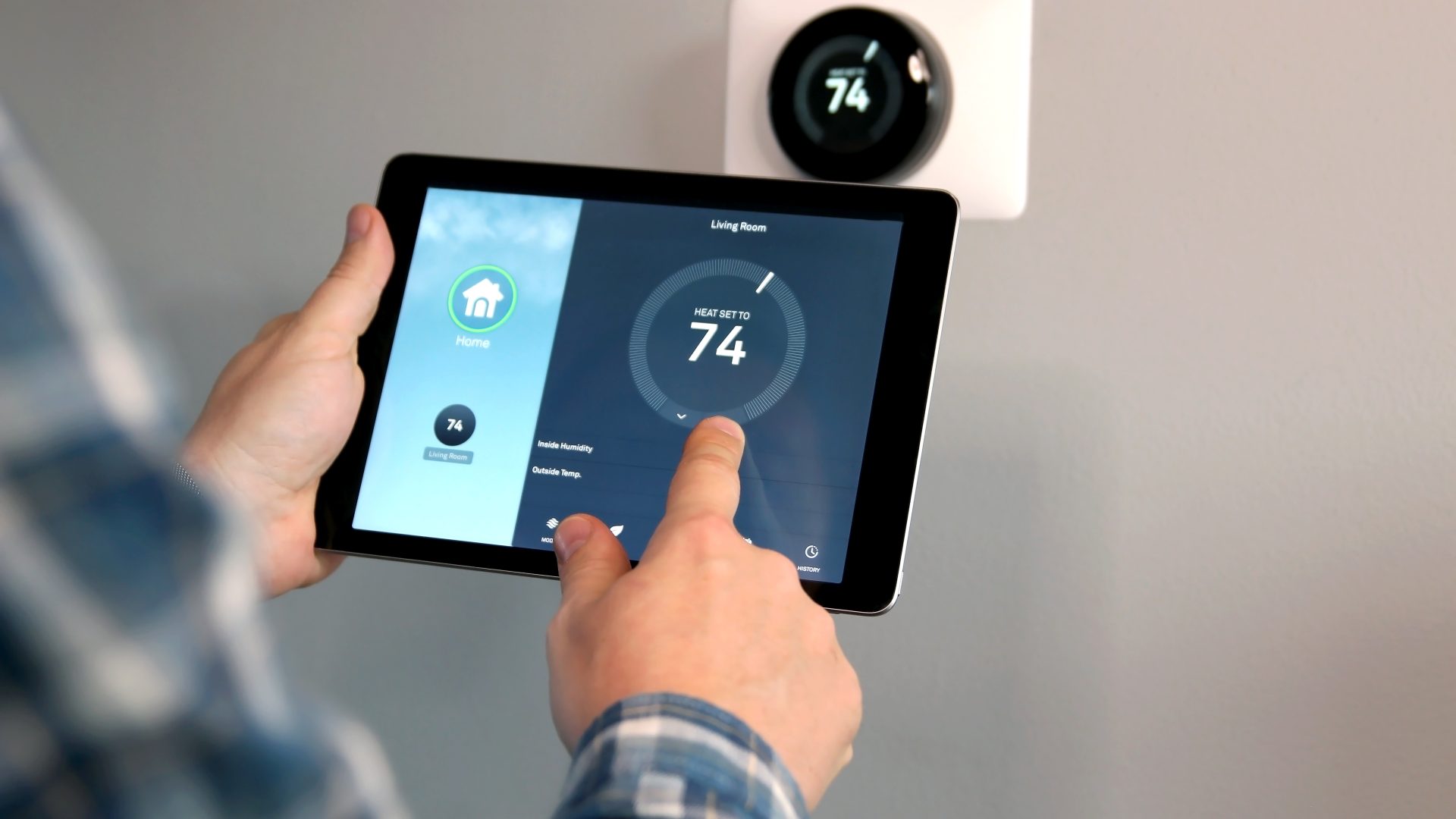

Your thermostat plays an important role in controlling your home’s heating system. When the indoor temperature falls below the temperature you have selected, the thermostat sends a signal to the furnace to begin a heating cycle. Once the desired temperature is reached, the thermostat signals the furnace to stop heating.
When your furnace does not respond after you adjust the thermostat, the problem may not necessarily be with the furnace itself. The thermostat, electrical connections, airflow, or other components may be responsible.
Understanding some of the common causes can help you determine when a simple adjustment may solve the issue and when professional furnace service is needed.
Check Your Thermostat Settings
Before assuming there is a serious furnace problem, check the thermostat settings. It is possible for a setting to prevent the furnace from operating when you expect it to.
Make sure the thermostat is set to Heat rather than Cool or another operating mode. Then check the temperature setting and make sure it is higher than the current indoor temperature.
If your thermostat displays a low-battery warning or has a blank screen, replacing the batteries may resolve the problem. Some thermostats receive power directly from the HVAC system, while others use batteries, so the cause of a blank display can vary.
A Dirty Thermostat Can Cause Problems
Dust and debris can sometimes accumulate inside or around a thermostat. If the thermostat cannot accurately sense the temperature of the room, it may not respond correctly to temperature changes.
The thermostat’s location can also affect its readings. If it is installed near a drafty door, direct sunlight, a heat-producing appliance, or another source of unusual temperatures, it may not accurately represent the temperature throughout the home.
Keeping the area around the thermostat clear and having it inspected as part of regular HVAC maintenance can help support accurate operation.
Your Furnace May Have an Electrical Problem
Your furnace requires electricity to operate its controls, blower, and other components. If the furnace loses power, it may not respond when you change the thermostat.
Check whether the furnace has power and whether a circuit breaker has tripped. Some furnaces also have a nearby service switch that resembles a regular light switch. If this switch has been turned off, the furnace may not operate.
If the breaker continues to trip after being reset, however, there may be an electrical problem that requires professional attention. Repeatedly resetting a breaker without determining why it is tripping is not recommended.
A Faulty Thermostat Could Be the Cause
Thermostats can eventually develop electrical or mechanical problems. A thermostat that is not communicating properly with the furnace may prevent the heating system from responding to temperature adjustments.
Modern programmable and smart thermostats can also have configuration or connectivity issues. Incorrect settings, wiring problems, or compatibility issues may interfere with communication between the thermostat and furnace.
An HVAC professional can test the thermostat and wiring to determine whether the thermostat is actually sending the appropriate signal to the furnace.
The Furnace May Be Experiencing a Safety Shutdown
Your furnace contains safety controls designed to protect the equipment and your home. If the system detects an unsafe operating condition, it may shut down rather than continue running.
For example, a limit switch can shut off the burners if the furnace becomes too hot. Restricted airflow from a dirty filter, blocked ductwork, or a blower problem can contribute to overheating.
Other furnace components can also cause the system to stop operating. If your furnace repeatedly starts and shuts down or refuses to respond to thermostat changes, professional diagnosis can help identify the underlying problem.
A Dirty Air Filter Can Affect Furnace Operation
A dirty air filter is one of the simplest furnace problems to overlook. As the filter becomes clogged, it can restrict airflow through the system.
Restricted airflow can make it harder for your furnace to transfer heat properly and may contribute to overheating. In some cases, the furnace may shut down its heating cycle as a safety precaution.
Check your filter regularly and replace it according to the manufacturer’s recommendations. Homes with pets, high dust levels, or frequent furnace use may require more frequent filter changes.
When to Call an HVAC Professional
If your furnace still does not respond after checking the thermostat settings and basic power supply, it is time to have the system inspected.
Professional service may be especially important if you notice:
- The thermostat is calling for heat but the furnace does nothing.
- The furnace starts but quickly shuts down.
- The thermostat display is blank.
- The furnace repeatedly trips a circuit breaker.
- The blower runs but the furnace does not produce heat.
- Your home remains cold despite raising the thermostat.
- You hear unusual sounds when the furnace attempts to start.
An HVAC technician can test the thermostat, electrical components, safety controls, ignition system, blower, and other parts to determine what is preventing the furnace from responding.
Professional Furnace Service From Texas Air Authorities
At Texas Air Authorities, we understand how frustrating it can be when your furnace does not respond to thermostat changes. Our NATE-certified technicians have the experience to diagnose heating problems on all makes and models of HVAC equipment.
We can inspect your thermostat, furnace, ductwork, and other components to determine the source of the problem. Once we identify the issue, we explain the problem and available options so you can make an informed decision about your HVAC system.
We offer same-day appointments, free estimates, and free same-day quotes. Our technicians are respectful, friendly, knowledgeable, and committed to treating your home with the same care and respect we would give our own.
Texas Air Authorities proudly serves Arlington, Bedford, Colleyville, Dalworthington Gardens, Euless, Fort Worth, Grand Prairie, Grapevine, Hurst, Irving, Kennedale, Mansfield, North Richland Hills, Pantego, Watauga, and surrounding communities.
Conclusion
When your furnace does not respond to thermostat changes, the problem can have several possible causes. Incorrect settings, weak batteries, a faulty thermostat, electrical issues, restricted airflow, dirty filters, or furnace safety controls can all affect normal heating operation.
Checking the thermostat settings and filter is a good starting point, but persistent problems should be professionally diagnosed. Texas Air Authorities provides reliable furnace and HVAC services to help identify heating problems and restore comfortable, dependable operation throughout your home.
Texas Air Authorities is the premier choice for HVAC services in Arlington. With a team of highly trained and certified technicians, we have the expertise to handle all of your heating, ventilation, and air conditioning needs. Our commitment to customer satisfaction is unmatched, and we always go above and beyond to ensure that your experience with us is positive. We use only the highest quality parts and equipment to ensure that your HVAC system is running at peak performance. Plus, we offer competitive pricing and flexible scheduling to fit your needs. Choose Texas Air Authorities for all of your HVAC needs in Arlington.
